UNDERSTANDING YOURSELF
The stories, predictions, protections, and patterns we carry.
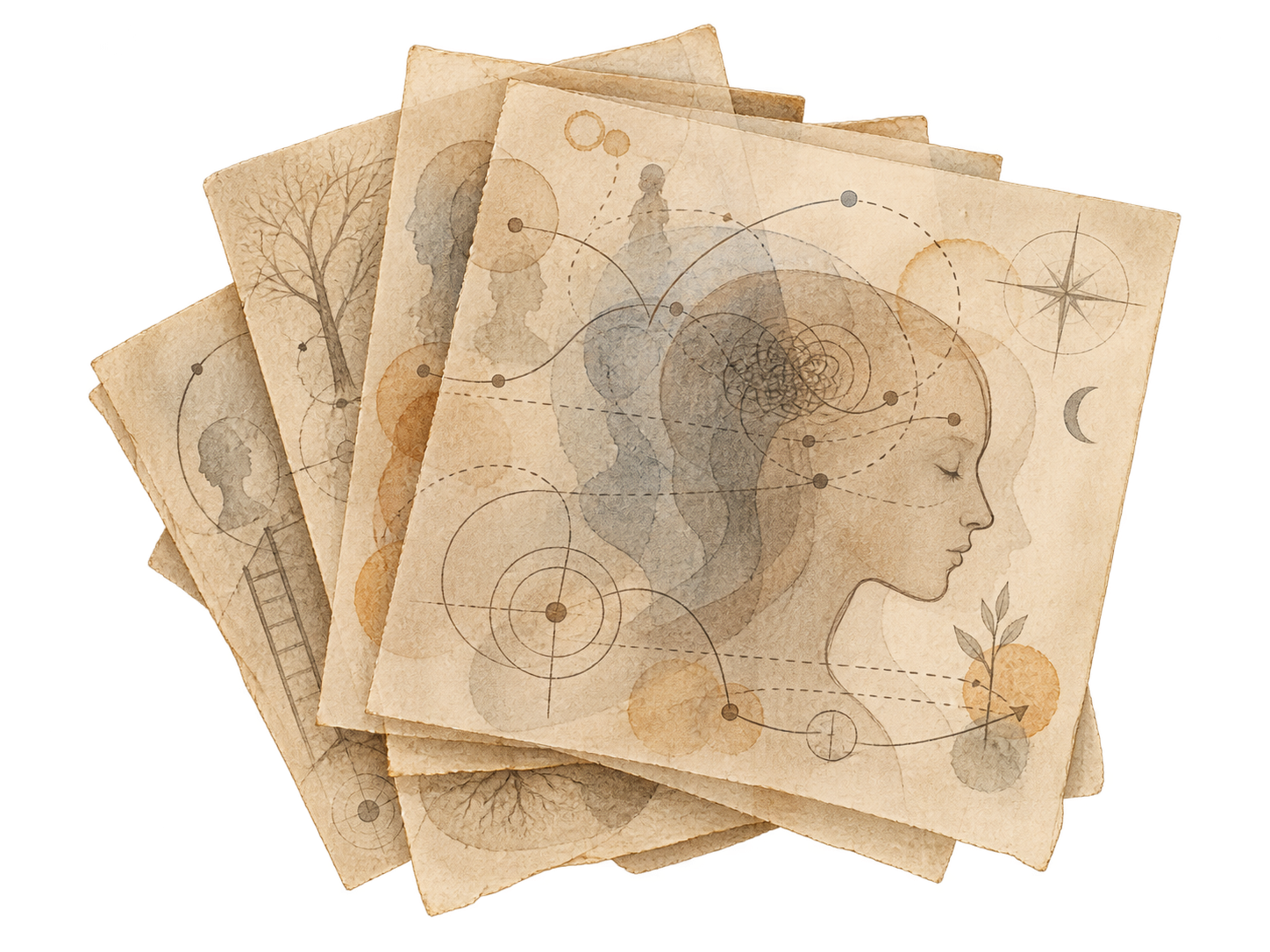
We do not meet each moment as a blank slate. We bring memories, expectations, learned protections, old conclusions, and ways of making sense of ourselves and other people. Sometimes those patterns help us navigate life. Sometimes they continue operating long after the circumstances that shaped them have changed.
-
How Patterns Take Shape
From experience to expectation to response
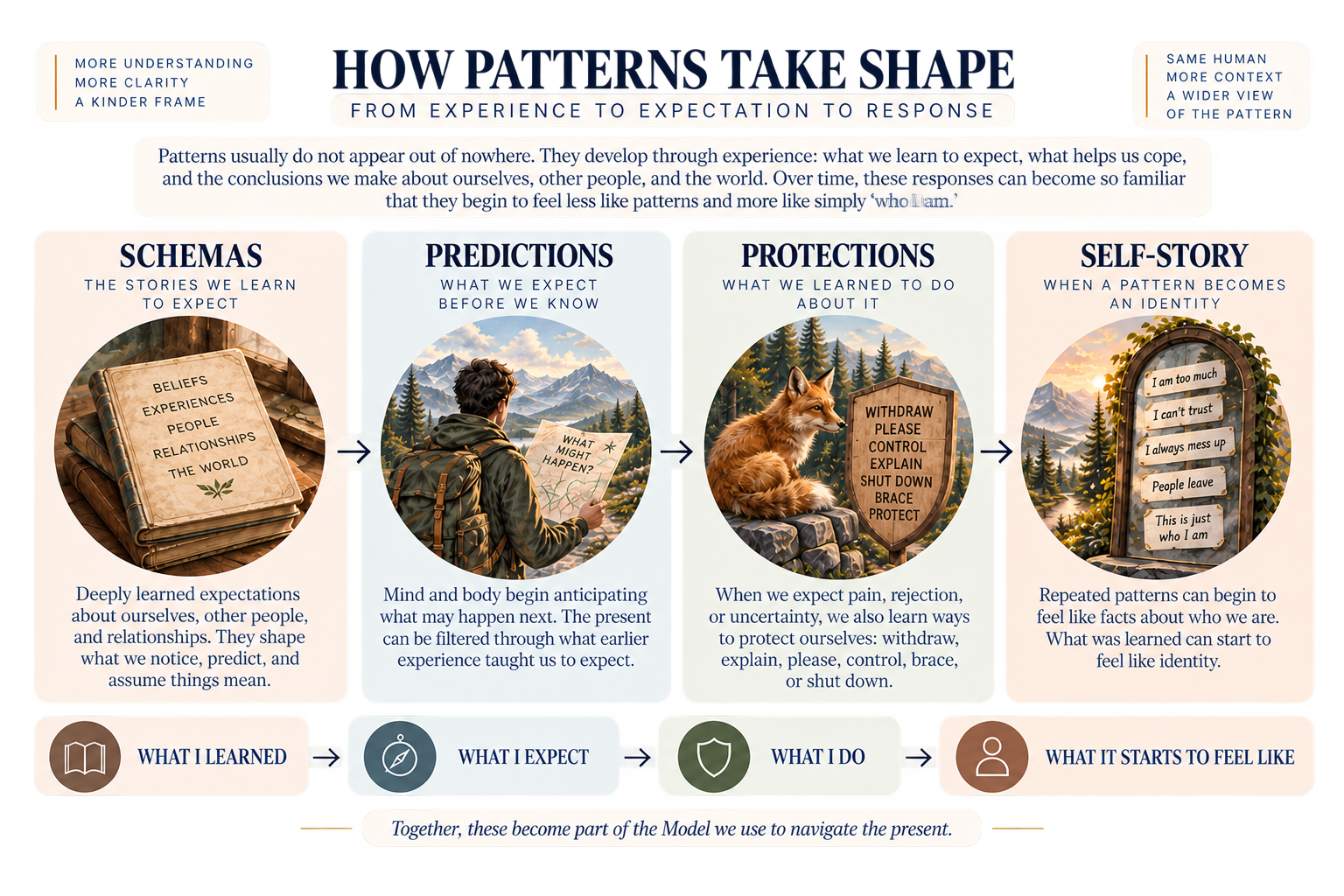
Patterns usually do not appear out of nowhere. They develop through experience: what we learn to expect, what helps us cope, and the conclusions we make about ourselves, other people, and the world. Over time, these responses can become so familiar that they begin to feel less like patterns and more like simply “who I am.”
Schemas — The stories we learn to expect
Deeply learned expectations about ourselves, other people, and relationships. They shape what we notice, predict, and assume things mean.
Predictions — What we expect before we know
Mind and body begin anticipating what may happen next. The present can be filtered through what earlier experience taught us to expect.
Protections — What we learned to do about it
When we expect pain, rejection, or uncertainty, we also learn ways to protect ourselves: withdraw, explain, please, control, brace, or shut down.
Self-Story — When a pattern becomes an identity
Repeated patterns can begin to feel like facts about who we are. What was learned can start to feel like identity.
These learned expectations, predictions, and protections become part of the Model we use to navigate the present.
-
The Model
How experience becomes expectation
None of us meets the present completely fresh. Experience teaches us what to expect, what to notice, what danger looks like, what closeness means, and what we may need to do next.
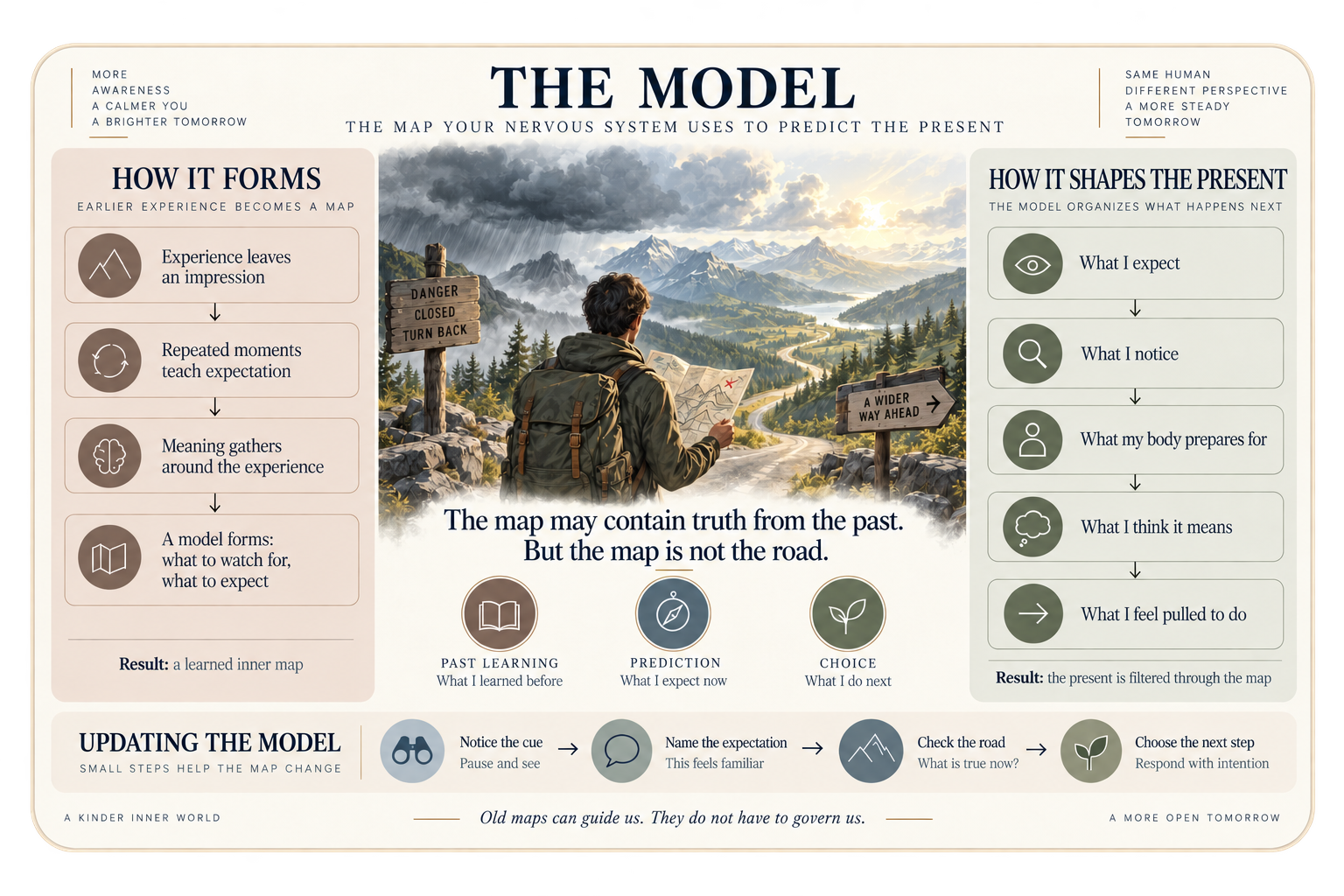
Over time, these lessons become an internal model—a kind of map the mind and body use to anticipate what is happening now. The map may contain real wisdom from the past. But sometimes the road has changed.
-
How it forms
Earlier experience becomes a map
1. Experience leaves an impression
2. Repeated moments teach expectation
3. Meaning gathers around the experience
4. A model forms: what to watch for, what to expect
Result: a learned inner map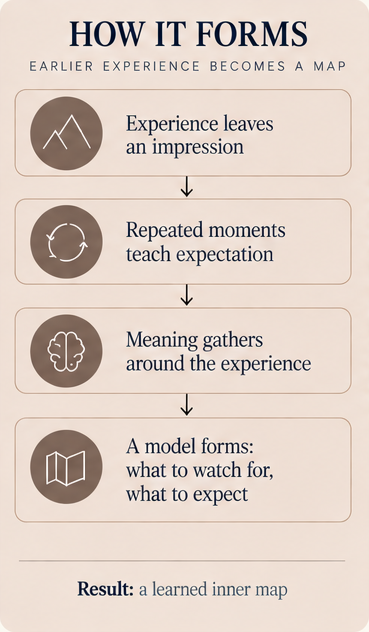
-
How it shapes the present
The Model organizes what happens next
1. What I expect
2. What I notice
3. What my body prepares for
4. What I think it means
5. What I feel pulled to do
Result: the present is filtered through the map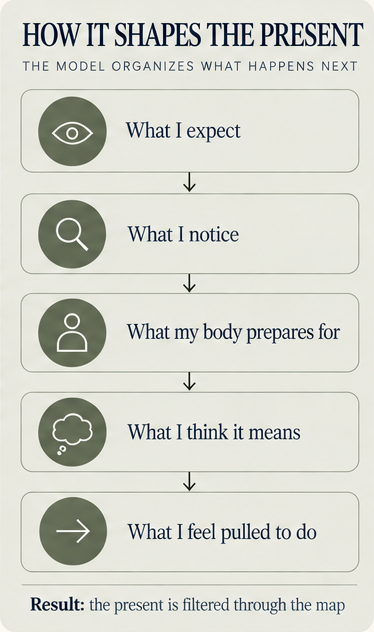
-
Updating the Model: 1–2
Small steps help the map change
1. Notice the cue — Pause and see
2. Name the expectation — This feels familiar
-
Updating the Model: 3–4
3. Check the road — What is true now?
4. Choose the next step — Respond with intention
Old maps can guide us. They do not have to govern us.
-
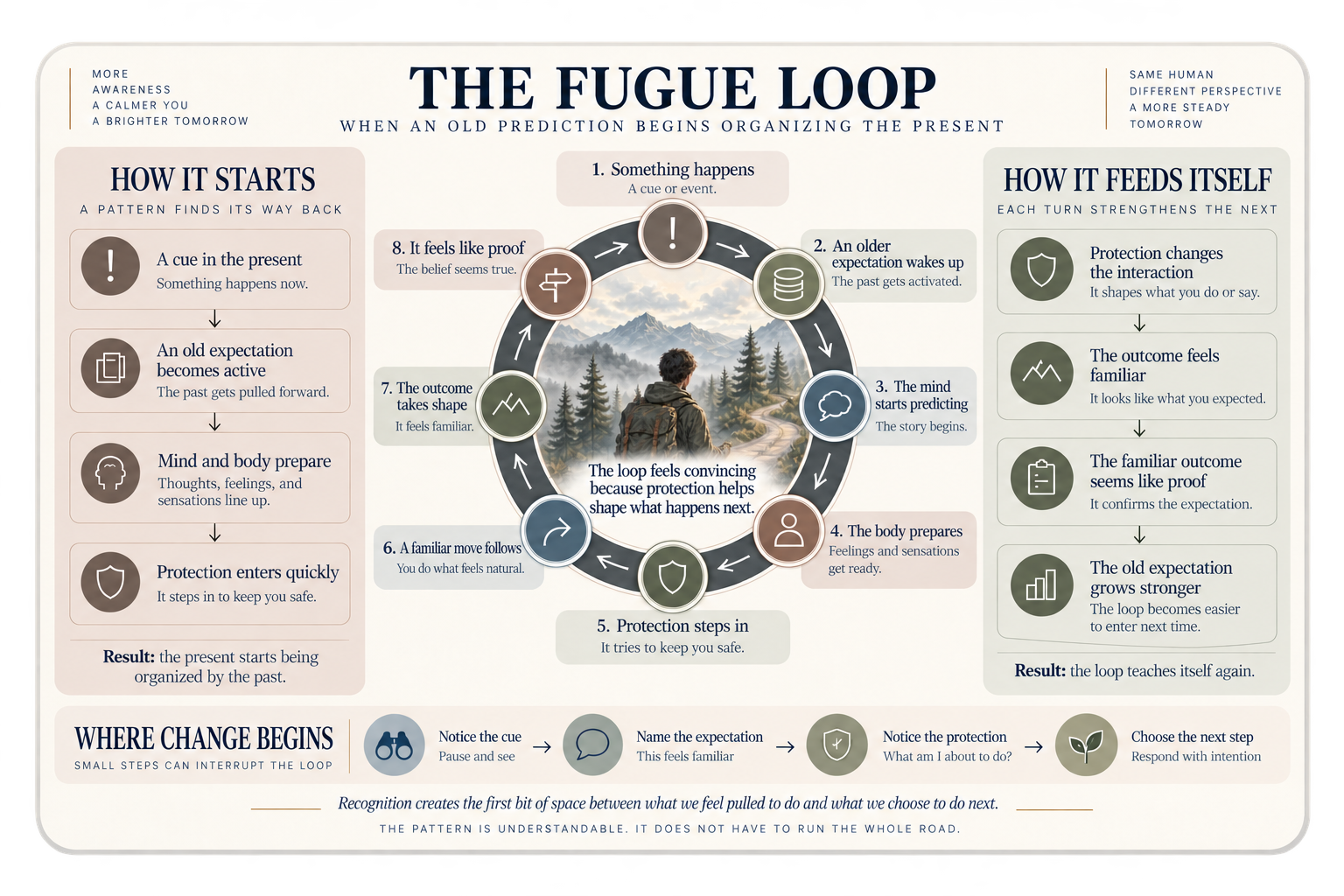
The Fugue Loop
When the Pattern Starts to Run Itself
Sometimes an old expectation does more than shape what we notice—it begins to organize what happens next. We anticipate danger, rejection, criticism, abandonment, or failure, and a familiar protective response steps in. That response may make sense given what we have learned, but it can also change the interaction or situation in ways that seem to confirm the original expectation. The pattern then begins feeding itself: prediction leads to protection, protection influences the outcome, and the outcome feels like proof that the prediction was right. The Fugue Loop is this self-reinforcing cycle—not because the fear was foolish, but because an old strategy has begun helping recreate the conditions it was trying to prevent.
-
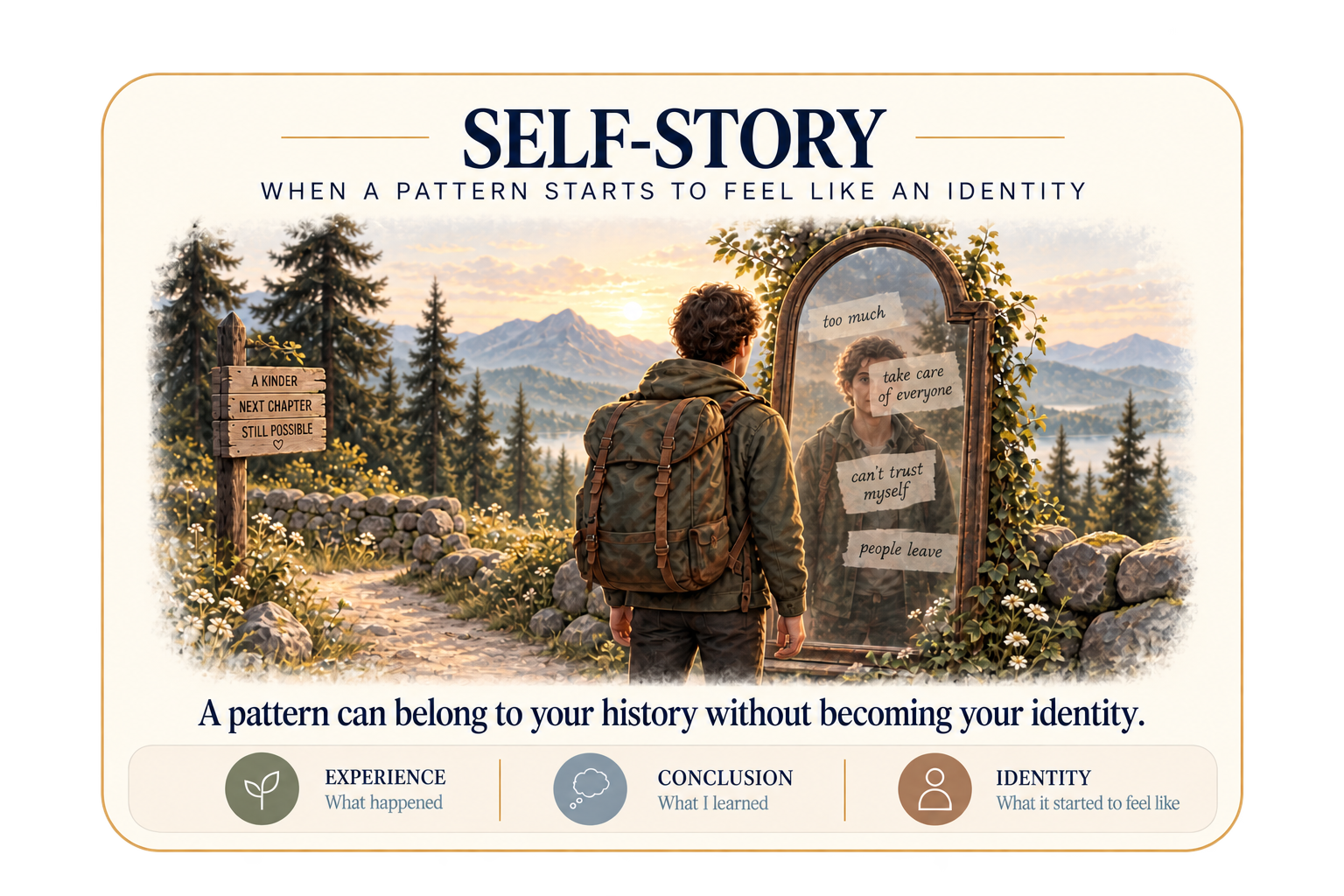
Self-Story
When a Pattern Starts to Feel Like an Identity
Repeated experiences can gradually become conclusions about who we are: I am too much. I have to take care of everyone. I cannot trust myself. People always leave. When the same expectation and protection repeat often enough, the pattern may begin to feel less like something we learned and more like a fact about who we are.
But a familiar conclusion is still a conclusion. Part of change is learning to distinguish what happened, what we learned from it, and who we actually are.
-
Pausing at the Gate
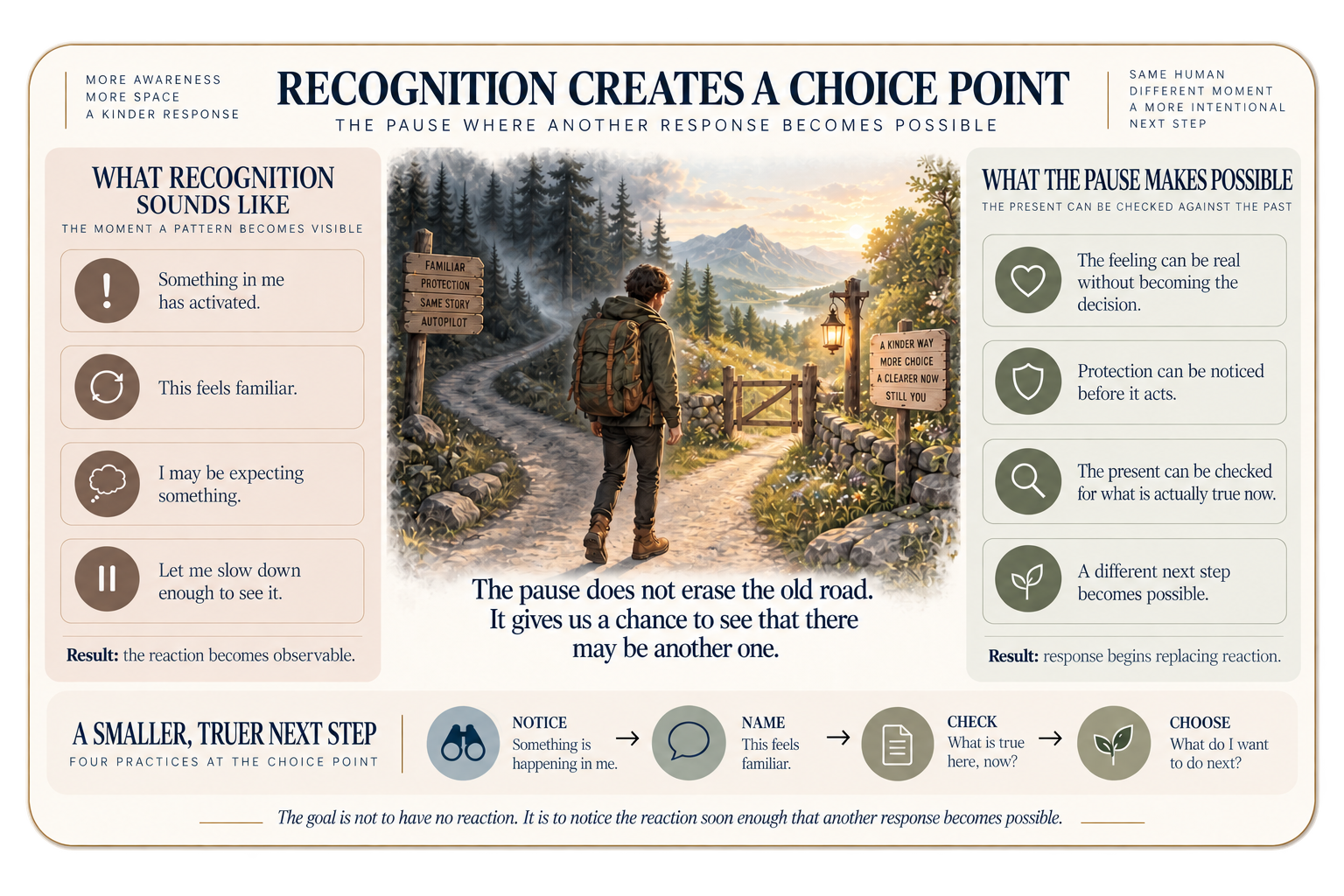
Recognition Creates a Choice Point
Recognizing a pattern does not mean we suddenly stop having the feeling, lose the old expectation, or know exactly what to do. What changes first is smaller: we notice what is happening before the familiar response has completely taken over. In that pause, we can ask what the present actually requires rather than automatically doing what the past taught us to do. The feeling may still be real. The protection may still make sense. But neither has to make the next decision for us.
-
Updating the Model
New Experience Becomes New Learning
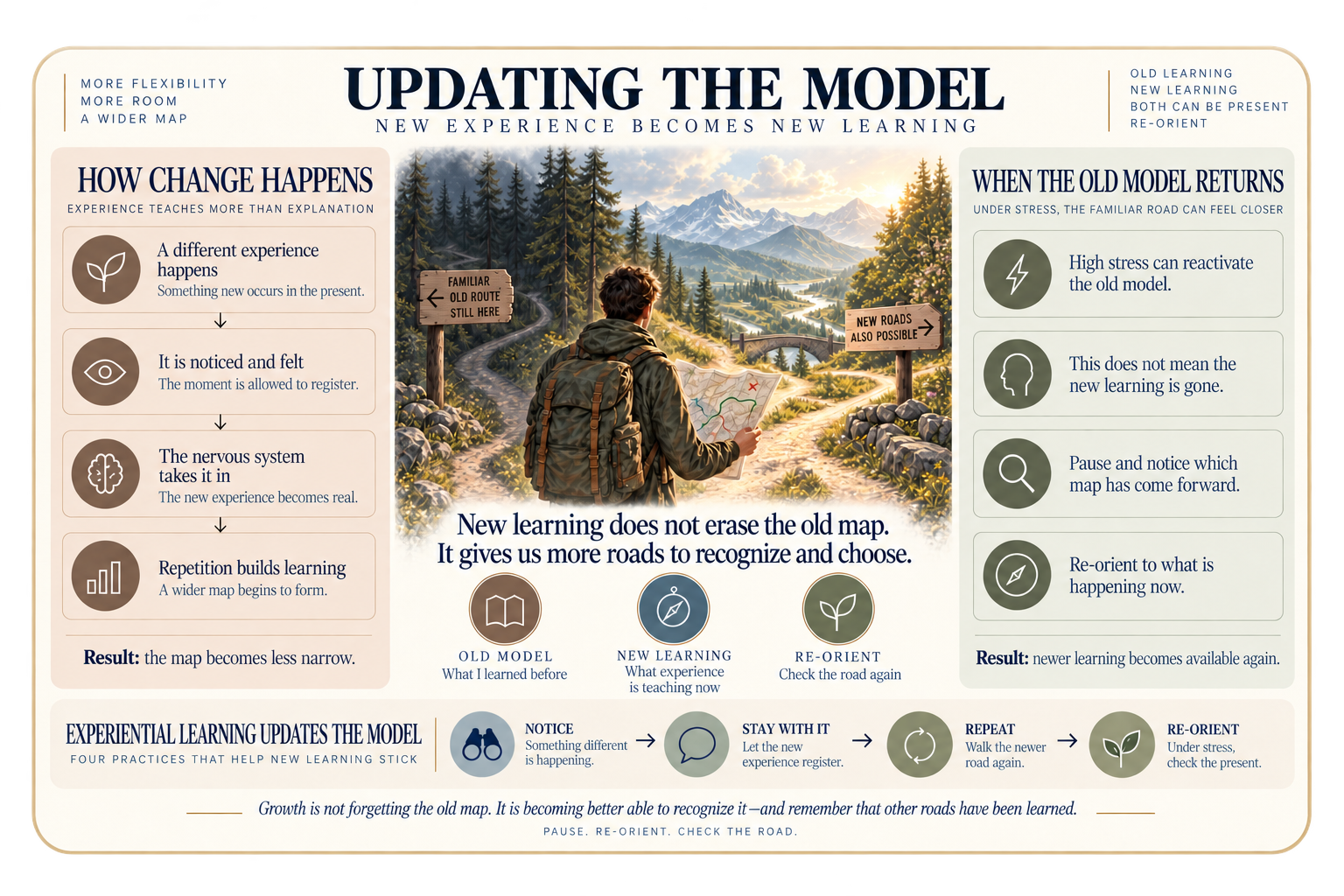
The Model changes through experience, not explanation alone. When something different happens—and we are able to notice, tolerate, and take it in—the mind and body begin learning that the old prediction is not the only possibility. Over time, repeated experiences of safety, honesty, repair, boundary, competence, connection, or recovery can create a wider map of what may happen next.
The older model does not necessarily disappear. Under stress, exhaustion, conflict, loss, or uncertainty, it may become active again because it is familiar and well-practiced. That does not mean the newer learning is gone. It means we may need to pause, notice which map has come forward, and re-orient to what is actually happening now.